MICROTIA TREATMENT OVERVIEW
Understanding Microtia Surgery: Now, Hope Is Within Reach
For many, becoming a parent is one of life’s most meaningful experiences. But it can also be one of the most challenging—especially when unexpected obstacles arise, like medical conditions.
Hearing that your baby has been born with microtia, a rare medical condition involving a visible difference, can feel overwhelming.
It’s natural to have questions about the condition, potential complications, and how it will impact daily life. But it’s equally important to hold onto hope—your child’s future can still be bright.
Dr. Youssef Tahiri and his team are here to provide expert guidance and support for families facing microtia.
As a world-renowned pediatric plastic and craniofacial surgeon, Dr. Tahiri specializes in adult reconstructive surgery and is dedicated to helping patients overcome the challenges of microtia with compassion, precision, and skill.
At The Los Angeles Ear and Craniofacial Center team, you can trust you’re receiving the highest level of care. We’ll help you navigate the complexities of microtia and explore the best treatment options for your child.
Take the first step toward healing. Call (310) 255-4476 or email [email protected] to schedule your free Virtual Consultation today.
Microtia Treatment Overview
As a parent of a child diagnosed with microtia, it’s completely understandable to feel overwhelmed and anxious about your child’s future.
Your little one’s visible difference may expose them to bullying, discrimination, or feelings of isolation. They may also face developmental delays that could impact their ability to live a fulfilling and productive life.
On top of these concerns, figuring out the right treatment for your child can feel daunting—especially if you’re encountering microtia for the first time. With so much information to process and many options to consider, it’s hard to know where to start.
You may have already consulted several doctors, searching for clarity and guidance. Yet, finding a specialist with the skills, experience, and resources your child truly deserves can feel impossible.
The good news? You don’t have to face microtia alone—hope is within reach.
Dr. Youssef Tahiri, a globally recognized craniofacial and pediatric surgeon, understands the unique challenges microtia brings.
Personally chosen by Dr. John F. Reinisch—the inventor of the PPE (porous polyethylene) implant technique—Dr. Tahiri is a trusted leader in microtia reconstruction. With years of experience, he has successfully treated thousands of microtia patients.
At The Los Angeles Ear and Craniofacial Center, we’re here to support you every step of the way. Dr. Tahiri and his team provide advanced, compassionate care tailored to your family’s needs. We’re committed to ensuring you never feel alone on this journey.
To learn more about microtia and treatment options, contact us today to schedule a consultation.
Our Approach to Microtia Ear Reconstruction
Most surgeons employ rib cartilage ear reconstruction when treating microtia. This method aims to create an ear framework based on the cartilage taken from several ribs.
Like many of his peers, Dr. Youssef Tahiri also adopted this technique—but only for the first few years of his practice.
Eventually, Dr. Tahiri realized the rib cartilage method wasn’t delivering the results patients deserved. The outcomes didn’t justify the physical and emotional toll it took on children.
For instance, the procedure required long, painful, multi-staged surgeries. Plus, rib ear reconstruction is usually done after children have already started school (until 10 years of age), which means they will begin their education with noticeable microtia symptoms.
In 2013, Dr. Tahiri began performing the PPE (porous polyethylene) ear reconstruction technique and was completely sold. This surgical treatment delivered remarkable results and can be performed on children as young as 3.5 years old.
PPE ear reconstruction is a single-stage procedure involving minimal pain and discomfort. There’s no need for prolonged hospital stays since it can be done in an outpatient setting—patients can go home the same day they undergo PPE surgery.
This groundbreaking approach has transformed how we treat microtia and is central to the care we provide at The Los Angeles Ear and Craniofacial Center.
What Is Ear Reconstruction?
Ear reconstruction is a surgical procedure designed to rebuild a misshapen or missing ear, often caused by congenital conditions like microtia.
There are three primary techniques used for ear reconstruction. Each method is tailored to the patient’s unique needs, ensuring the best possible outcome.
- PPE ear reconstruction: This method uses porous polyethylene (PPE), a biocompatible material commonly used in medical implants, to reconstruct the ear.
- Autologous costal cartilage graft: In this approach, the patient’s rib cartilage is shaped into a 3D (three-dimensional) framework resembling a normal ear.
- Prosthetic ear reconstruction: A custom-made silicone prosthetic is created to address cosmetic concerns, offering a realistic alternative for individuals with microtia.
Microtia Surgery
Microtia surgery serves two purposes: It cosmetically improves the ear and addresses the hearing loss caused by aural atresia. Dr. Tahiri works alongside board-certified pediatric anesthesiologists and an experienced otologist who has special training in the treatment of aural atresia.
Having these specialists on staff ensures our patients’ safety and positive surgical outcomes. Dr. Tahiri is known around the world as a leading expert in microtia surgery, and patients travel internationally to benefit from his abilities.
MEDPOR™ Ear Reconstruction
In 1991, Dr. John Reinisch invented the MEDPOR™ ear reconstruction technique, which is used by surgeons worldwide. MEDPOR™ uses porous polyethylene to create an artificial framework attached to the patient’s body tissues to grow a fully formed ear.
MEDPOR™ can be completed in as little as a single surgery, resulting in minimal scarring. MEDPOR™ is so effective that it can be completed without a hospital stay and on patients as young as three.
Rib Cartilage Ear Reconstruction
An older method of ear reconstruction involves harvesting a patient’s rib cartilage. Rib cartilage reconstruction was invented over a half-century ago, long before MEDPOR™ was created.
This often painful surgery removes cartilage from the ribcage to fashion an ear framework. Because this method requires removing the patient’s ribs, it is not performed on young children, as it would result in a chest deformity.
Silicone Prosthetic Ears
A third option for ear reconstruction is a silicone prosthetic. Silicone prosthetic ears are worn purely for cosmetic purposes and do not address hearing loss.
This method involves fashioning a prosthetic ear that is worn around the underdeveloped ear. Dr. Tahiri does not create prosthetic ears, but he can recommend them to patients who prefer this to MEDPOR™ or rib cartilage reconstruction.
The patient will then be referred to an anaplastologist who will assist them. Ear prostheses are not recommended for children, as they often knock the prosthetic off if they aren’t playing carefully.
Inner Ear Reconstruction
In addition to the ear lobe being underdeveloped, many microtia patients may also have a narrow or absent ear canal. Dr. Tahiri will check to see if the bones inside the inner ear fused correctly. If not, Dr. Tahiri works with a skilled otologist to create a new ear canal and eardrum. Inner ear reconstruction can be performed in conjunction with MEDPOR™ surgery.
Hearing Restoration
If your child has a microtia, they may experience some level of conductive hearing loss, especially if their middle ear or ear canal is underdeveloped.
An otolaryngologist (an ear, nose, and throat specialist) can conduct an audiological assessment to gauge your child’s hearing abilities.
After the evaluation, the specialist might suggest hearing aids to support your child’s communication development.
Banded hearing aids are an excellent option for younger kids (under three) since they don’t require surgery.
Once people are older, bone-anchored hearing aids (BAHA)—a type of device surgically attached to the skull—are often recommended.
According to the National Institutes of Health (NIH), BAHA offers better sound clarity than traditional bone-conduction hearing aids, making them a preferred choice for children over three.
In addition to hearing aids, speech pathologists can help children with microtia improve their communication skills by teaching strategies that foster speech and language growth.
The “Do Nothing” Option
Some people choose not to pursue any reconstruction, leaving their microtia ear as it is—and that’s perfectly okay. Many have adapted, often keeping their hair long to conceal the ear, especially in new social situations.
But if you’re considering microtia reconstruction, it’s essential to know that early intervention is key, especially when considering implant-based solutions like PPE.
Unlike cartilage reconstruction, which relies on waiting for older children to develop enough cartilage for a detailed framework, PPE ear reconstruction can be pursued earlier.
Starting sooner simplifies the process and supports your child’s confidence and development at a younger age. Most patients who undergo reconstruction report being happier and more confident, especially in social settings.
For Dr. Tahiri, it’s incredibly rewarding to see patients return proudly, showing their new ears—a clear sign of their satisfaction and confidence.
Evaluation and Diagnosis
Microtia features a noticeable abnormality of the outer ear, which is why it can generally be diagnosed at birth.
For example, your doctor may recommend a CT (computed tomography) scan (imaging test) to thoroughly examine your baby’s middle and inner ear.
Choosing the Right Microtia Ear Procedure
Microtia surgery aims to treat all microtia-related concerns, including physical differences, hearing impairment, and psychosocial issues.
From the moment you contact us at The Los Angeles Ear and Craniofacial Center, we’ll focus on educating you and your family about the condition, starting by reassuring you that you did nothing to cause your child’s condition.
Once you understand the available surgical reconstruction options, we can make an informed decision together.
How You Prepare
There are approximately 1 to 1.5 hours of preparation necessary before the surgery.
During this period, our team will:
- Administer anesthesia.
- Prepare your child’s head for the procedure.
- Plan the surgery.
- Make surgical markings.
What You Can Expect
Patients typically return to normal after the second day following surgery. There are no activity limitations as long as the patient keeps the head dry while the mold is in place and avoids contact sports.
Our patients often come from around the world and spend a few weeks in Los Angeles. They rollerblade by the beach, visit the zoo and museums, and participate in many outdoor activities.
The first post-operative appointment is on post-op day 2 or day 3. During this appointment, the absorptive dressing is removed.
If fluid is noticed beneath the scalp, it can be quickly drained percutaneously with a butterfly needle.
The silicone ear splint stays in place for two weeks after surgery. During this time, your child’s head must be kept dry. They should also avoid sleeping on the operated side to prevent pressure on the reconstructed ear.
As a parent, you should sleep beside your young child to prevent them from accidentally turning onto the affected side.
The silicone ear mold is removed at the two-week follow-up, and the head and ear are gently washed with shampoo in the office. You’ll learn how to clean the ear gently with your fingers each day.
A new silicone mold is made for the child to wear at night for the next four months, with a light coat of ointment applied to the ear for the next week.
The third post-operative visit occurs three weeks later when patients can begin washing the ear with a gauze pad to help remove dissolving sutures.
We’ll teach you how to create the silicone ear mold, which your child will wear every night for the next four months to protect their ear and, more importantly, maintain its projection.
Long Term Outlook
The long-term outlook for PPE ear reconstruction is mainly positive. Having worked closely with Dr. Reinisch, the inventor of the PPE technique, Dr. Tahiri had the opportunity to track patients over many years.
What stands out is how the definition of the ear continues to improve over time and remains stable, even after decades.
This outcome is in stark contrast to ears reconstructed with cartilage, which often lose definition and don’t retain a natural look after 10 years. In fact, cartilage ears tend to lose shape even after just a few stages of surgery.
Click here to see a patient who, after 20 years, still has a well-defined ear following his PPE reconstruction.
At What Age Can My Child’s Microtia Be Repaired? Can I Have The Microtia Repair Done Earlier?
The age at which you or your child can undergo microtia surgery depends on the procedure type.
For PPE ear reconstruction, surgery is typically done around three years of age. Meanwhile, rib cartilage reconstruction is generally recommended for children between 7 and 10 years old.
Why It’s Done
An ear reconstruction offers several advantages:
- Restores facial harmony
- Helps with psychosocial development as the child grows
- Improves hearing with a BAHA (bone-anchored hearing aid) or atresiaplasty (surgical repair of the ear canal)
- Makes wearing glasses more comfortable
- Can prevent bullying and social isolation if done before five years old (school age)
Risks
Understanding possible treatment-related issues is essential to addressing them promptly and effectively. Dr. Tahiri’s preferred method, PPE, minimizes risks, pain, and scarring.
That said, like any medical procedure, each microtia treatment carries some risks, such as the following:
Rib Cartilage Reconstruction
- It typically requires two to five surgeries (prolonged treatment process).
- Canal repair cannot be performed until the ear is fully reconstructed—typically between 7 and 10 years old—resulting in delayed hearing restoration.
- Delayed intervention may lead to the child being bullied at school for their noticeable microtia.
- Cartilage removal is painful and requires extended hospitalization, IV (intravenous) medication, and a permanent chest scar.
Silicone Ear Prosthetic
- The seam between the prosthetic and the skin can be hard to hide.
- Active children may lose their prostheses during rough play or sports.
- The prosthesis fades and may need replacement every two to three years.
- The prosthesis needs to be removed at night and replaced each morning.
PPE Ear Reconstruction
- PPE is a foreign material, which may raise questions regarding long-term compatibility
- This method requires a highly experienced specialist to perform for optimal results.
- The long-term outcome of using PPE to reconstruct the ear is relatively unknown since it was only invented in 1991.
The Cost of Microtia Treatment
The cost of microtia treatment varies depending on the procedure you choose.
For instance, the PPE technique is often a single outpatient procedure. As such, it usually costs less than rib cartilage reconstruction (a procedure requiring multiple surgeries).
The good news is that we are an out-of-network provider. Our dedicated team can check your coverage, work directly with your insurance company, and guide you through the process.
Assessing the Need for Ear Surgery: For Your Child’s Benefit or Personal Reasons?
Ear surgery can serve two primary purposes: functional improvement, such as better hearing, and cosmetic enhancement to improve appearance.
As Dr. Tahiri explains, cosmetic procedures focus on refining and enhancing natural features. The ear is essential to both aesthetics and functionality, making it a critical part of overall well-being.
If your child experiences life-altering symptoms due to microtia, seeking specialized care is crucial:
- Consult with experts: An otolaryngologist (ear, nose, and throat specialist) or an audiologist can assess your or your child’s hearing and balance.
- Consider early intervention: A bone-anchored hearing aid (BAHA) can support hearing and speech development for children with hearing loss. Ideally, this device should be fitted before your child reaches six months of age.
- Explore surgical treatment options: Procedures like polyethylene implant ear reconstruction can restore both the ear’s appearance and its function.
Understanding the process can help ease surgery-related concerns. That’s why we focus on educating parents about every step of microtia treatment—what to expect before, during, and after surgery.
If you have questions or feel uncertain, we’re here to provide clear answers and support.
How Do I Talk to My Child About Surgery?
Preparing a child for surgery requires balancing honesty with reassurance. It’s essential to give them enough time to understand what’s going to happen without letting their worries grow.
For toddlers, keep it simple and discuss the surgery just a day or two before the procedure. Preschool and school-age children who may have more questions should be informed three to four days in advance.
This approach gives them time to process the information without becoming overly anxious.
When explaining microtia surgery, focus on the positive outcomes. Let them know the surgery is necessary, but reassure them it doesn’t mean there’s something wrong with them.
You might explain that the surgery will help their ear look more like others and improve their hearing. Highlight how it’ll make everyday activities—like watching TV, talking with family, and listening at school—more manageable and more enjoyable.
What Is Microtia?
Microtia is a rare congenital disorder where the outer ear (pinna) is underdeveloped, misshapen, or missing.
Children with microtia often have a very narrow ear canal (canal stenosis) or no external ear canal at all (aural atresia). While uncommon, microtia affects approximately 1 to 5 out of every 10,000 births.
As a parent, learning about this condition for the first time can feel overwhelming—but that’s completely natural. The good news is that the proper care can help your child live a full, happy, and confident life.
At The Los Angeles Ear and Craniofacial Center, we specialize in personalized, compassionate care for children and adults with microtia.
Dr. Tahiri and his team are dedicated to making the treatment journey as smooth and stress-free as possible for you and your child.
Causes
The causes of microtia in most infants remain unknown. Still, some known factors include genetic or chromosomal changes in the baby’s genes and certain medications like isotretinoin (Accutane®) during pregnancy.
Research also suggests that maternal diabetes before pregnancy and a diet low in folic acid and carbohydrates may increase the risk of having a baby with microtia.
Is Microtia Genetically Inherited?
In most cases, 95% of children with microtia have no family history of the condition, and it typically occurs randomly during the embryo’s early development.
Meanwhile, in about 5% of cases, microtia has a genetic cause and may be present in multiple family members, sometimes skipping generations or affecting different ears.
For parents, the risk of having another child with microtia is estimated to be 5%. For a child with microtia, there’s a 5% chance that they will pass the condition on to their own offspring.
Types of Microtia
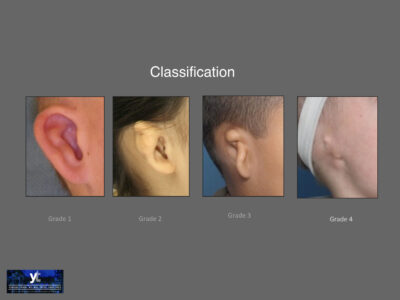
Microtia presents in various forms, from minor abnormalities to the complete lack of the external ear.
- Type 1: The outer ear is smaller than usual, but all parts are present, sometimes with a missing or narrowed ear canal.
- Type 2: The ear is underdeveloped, especially the upper two-thirds, often with a narrowed or missing ear canal.
- Type 3: The ear’s cartilaginous framework is underdeveloped, leaving only the lobule (ear lobe), the most common type of microtia.
- Type 4: No external ear structures are present (anotia), with a low-set hairline and missing ear canal.
Additionally, microtia can be categorized into lobular type (with a prominent lobule) and conchal type (linked to a narrowed ear canal). Each type presents its own challenges, which skilled ear reconstruction specialists like Dr. Tahiri can address effectively.
What Other Medical Problems Are Associated With Microtia?
Pediatric doctors and otolaryngologists address microtia’s hearing and cosmetic aspects, ensuring a comprehensive evaluation.
People with microtia might also have to face these malformations:
Hemifacial microsomia (HFM) Also known as Goldenhar syndrome (GS), HFM is characterized by these unique features:
- Micrognathia (mandibular hypoplasia): Underdeveloped lower jaw
- Eye anomalies
- Microphthalmia (smaller eyes)
- Epibulbar dermoid (growths on the eye)
- Coloboma (gap or notch in the eye)
- Ear deformities
- Microtia (underdeveloped ears)
- Preauricular skin tags (growths near the ear)
- Aural atresia (closed ear canal)
- Anotia (missing outer ear)
- Vertebral anomalies: GS can cause spine issues like underdeveloped vertebrae (hemivertebrae), fused bones, or scoliosis (curved spine).
If you’re concerned that these deformities will prevent your child from leading a normal life, you’re not alone. We’re here to reassure and help you.
Dr. Tahiri specializes in a range of surgeries, from microtia repair to skull reshaping and jaw realignment.
He can improve symmetry and bring harmony to your child’s face with care and precision.
- Velopharyngeal insufficiency (VPI)
VPI occurs when the velopharyngeal sphincter (a muscle essential for swallowing and speech) fails to close completely, allowing nasal speech, food, or drinks to pass through the nose.
Dr. Tahiri diagnoses VPI based on the results of a clinical test, speech evaluation, and nasopharyngoscopy.
Nasopharyngoscopy is a procedure that uses a small camera to view the throat and nasal cavity.
VPI treatment typically involves surgery to correct air leakage and hypernasal speech. That said, not all patients have to undergo surgical correction.
- Delayed developmental milestones
Untreated microtia can affect speech and school performance, especially if hearing loss is present.
Dr. Tahiri specializes in treating patients with microtia and addressing related developmental delays.
As a leading surgeon in ear reconstruction surgery, Dr. Tahiri has in-depth expertise in treating patients with microtia.
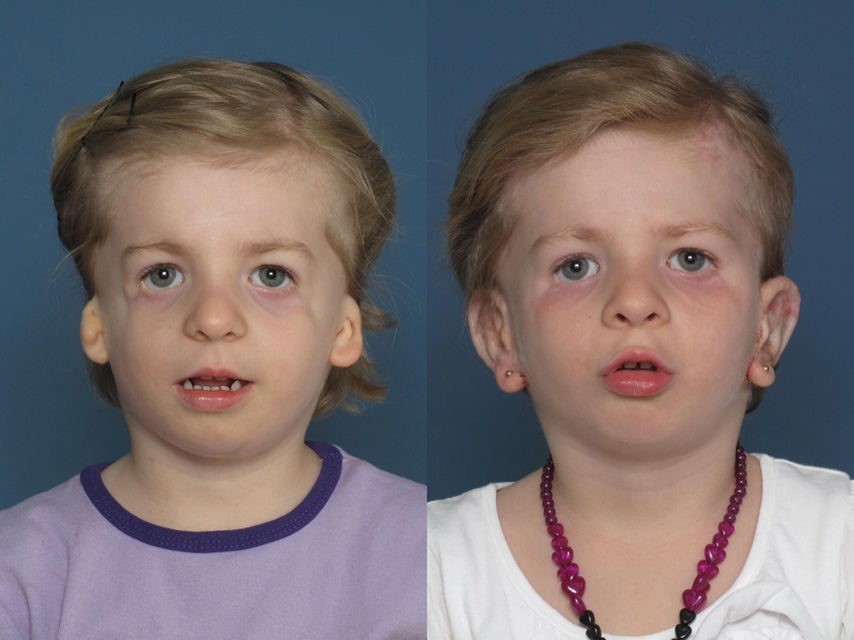
Click here to see Dr. Tahiri’s fantastic work. Learn how a 4-year-old girl with bilateral microtia and Treacher Collins syndrome underwent ear reconstruction using a PPE ear implant.
Can My Child Hear? Will This Affect My Child’s Speech Development?
If left untreated, hearing loss from microtia can lead to speech difficulties. Early intervention, like hearing aids or surgery, can help prevent developmental delays.
Why Wasn’t This Picked Up During My Ultrasound?
During an ultrasound, the technician usually focuses on examining significant organs and may not routinely check the external ears.
However, with the advancement of high-definition 3D ultrasound technology, it has become easier to detect microtia, allowing for earlier identification of the condition.
Aural Atresia Repair
If your child has aural atresia, they may be a candidate for ear canal reconstruction.
Dr. Tahiri will perform a CT scan to assess the health of the cochlea (a hollow tube in your inner ear), which is crucial for successful surgery, and to check for fused inner ear bones, which may limit surgery options.
Children must be at least two and a half years old to undergo the scan, and Dr. Tahiri will work with Dr. Roberson, an audiologist, and other specialists to determine eligibility for treatment.
Atresia occurs when the patient’s ear canal is underdeveloped. Dr. Tahiri can perform aural atresia, which rebuilds the inner ear and restores hearing.
An otologist will perform the surgery required to restore the ear canal, called a canalplasty. Dr. Tahiri will then complete the cosmetic improvements to the outer ear. Aural atresia repair is performed under an anesthetic.
If aural atresia repair is not possible, Dr. Tahiri will recommend alternatives, like bone-anchored hearing aids or a vibrant sound bridge. All of these options will be explained to the patient.
What Are Some Suggestions From Other Parents?
As a parent of a child with microtia, it’s natural to feel overwhelmed or uncertain about the best way forward. Emotions, family opinions, and cultural or religious beliefs can complicate the process, making it even harder to navigate.
The good news is that you’re not alone. Many parents of children with microtia share valuable insights based on their own experiences.
For example, Ear Community, a support group founded by a mother of a child with microtia, emphasizes an essential reminder: your child’s condition is not your fault.
Cultural or religious beliefs can sometimes lead to unnecessary guilt, especially for mothers. However, there’s no scientific evidence to suggest that anything done during pregnancy causes microtia.
FAQs: Expert Guidance and Answers to Your Concerns
1. Should we have a CT scan?
Whether or not you have to have a CT scan depends on the timing and necessity.
CT (computed tomography) scans provide detailed ear images, which can help diagnose microtia. That said, due to the radiation exposure-related risks, they are generally discouraged until the child is old enough.
The ideal age for a CT scan is around 2.5 years, when the skull, especially the temporal bone, is nearly adult-sized.
Parents of very young children must consult Dr. Tahiri to determine if and when a CT scan is appropriate for their child’s condition.
2. How painful is microtia surgery?
With modern techniques like PPE ear reconstruction, the surgery-related pain is minimal to nonexistent.
On the other hand, the traditional cartilage-based method, which involves cartilage removal, can be painful, often requiring extended hospital stay and IV pain medications.
The procedure also leaves a permanent chest scar and carries the risk of chest wall deformity.
3. Which specialists would I need to contact?
Several specialists may be involved in your child’s care. Craniofacial or microtia teams are ideal, as they collaborate to ensure the best outcomes for your child. Children with microtia typically benefit from the following:
- Craniofacial pediatric plastic surgeon: A craniofacial surgeon undergoes extensive training, including general surgery, plastic surgery, and craniofacial surgery fellowship at a children’s hospital.
- Otologist: Otologists diagnose and treat middle ear problems and perform complex ear surgeries, such as otoplasty.
- Audiologist: Audiologists specialize in diagnosing, treating, and managing hearing, balance, and related neural disorders.
- Geneticists: Geneticists can help you understand how microtia may run in families and explain the likelihood of the condition occurring in future generations.
- Speech therapists: Speech therapists can help microtia patients use their vocal cords effectively and teach techniques to produce more precise sounds.